Best Greyhound Betting Sites – Bet on Greyhounds in 2026
Loading...
Racing Without Dogs
Virtual greyhound racing exists in a different universe from the real thing. There are no dogs, no form guides, no trainers, no track conditions, and no sectional times. What there is — and this is all there is — is a random number generator dressed up in a graphical simulation to look like greyhound racing. The visuals borrow the sport’s aesthetics: six traps, a sand track, a mechanical hare, dogs running in jacket colours. But underneath the animation, the result is determined by an algorithm before the virtual race starts. The dogs on screen are actors in a pre-written drama.
That distinction matters. Virtual greyhound racing is a betting product, not a sport. It’s designed to fill gaps in the live racing schedule, offering punters something to bet on 24 hours a day regardless of whether any real greyhounds are running. It serves a purpose in the betting ecosystem, and it attracts significant turnover. But treating it like real greyhound racing — applying form study, trap analysis, or any skill-based method — is a fundamental error, because the outcomes are random by design.
This guide explains how virtual greyhound racing works mechanically, where you can bet on it, the critical differences from real racing, and the limited tactical considerations that do apply.
RNG and Virtual Race Mechanics
Every virtual greyhound race is determined by a random number generator — a certified, audited algorithm that produces outcomes with defined probability distributions. Before the virtual race animation begins, the RNG has already determined the finishing order. The animation you watch is a visual representation of a result that was decided mathematically, not competitively.
The RNG assigns each virtual dog a probability of finishing in each position. These probabilities are set by the virtual racing provider (companies like Inspired Entertainment, Leap Gaming, or Kiron Interactive) and are reflected in the odds displayed before the virtual race. A virtual dog priced at 2/1 has been assigned a higher probability of winning than one priced at 8/1, just as in real racing — but the probability is a mathematical input to the RNG, not a reflection of any form, ability, or physical characteristic.
The odds in virtual racing are fixed and predetermined. Unlike real racing, where the starting price is influenced by market activity, virtual race odds are set by the provider and don’t change based on how much money is wagered. The overround — the bookmaker’s margin — is built into the virtual odds at the point of creation and is typically higher than in real greyhound racing. Overrounds of 120 to 130 per cent are common in virtual greyhound markets, compared to 112 to 118 per cent in live markets. That higher margin means the house edge is structurally larger.
The RNG itself is subject to regulatory certification. In the UK, virtual racing products must be tested and certified by approved testing laboratories (such as eCOGRA, BMM Testlabs, or GLI) to ensure the random number generation is genuinely random and not manipulable. The UK Gambling Commission requires virtual products offered by licensed operators to meet these standards. The randomness is real — but the house edge built into the odds ensures the operator profits over volume, regardless of the randomness.
Virtual races run on a continuous schedule, typically every two to four minutes. There are no rest days, no weather delays, and no non-runners. The perpetual availability is the product’s main commercial feature — it gives punters a constant stream of events to bet on when live sport isn’t available.
Where to Bet on Virtual Greyhounds
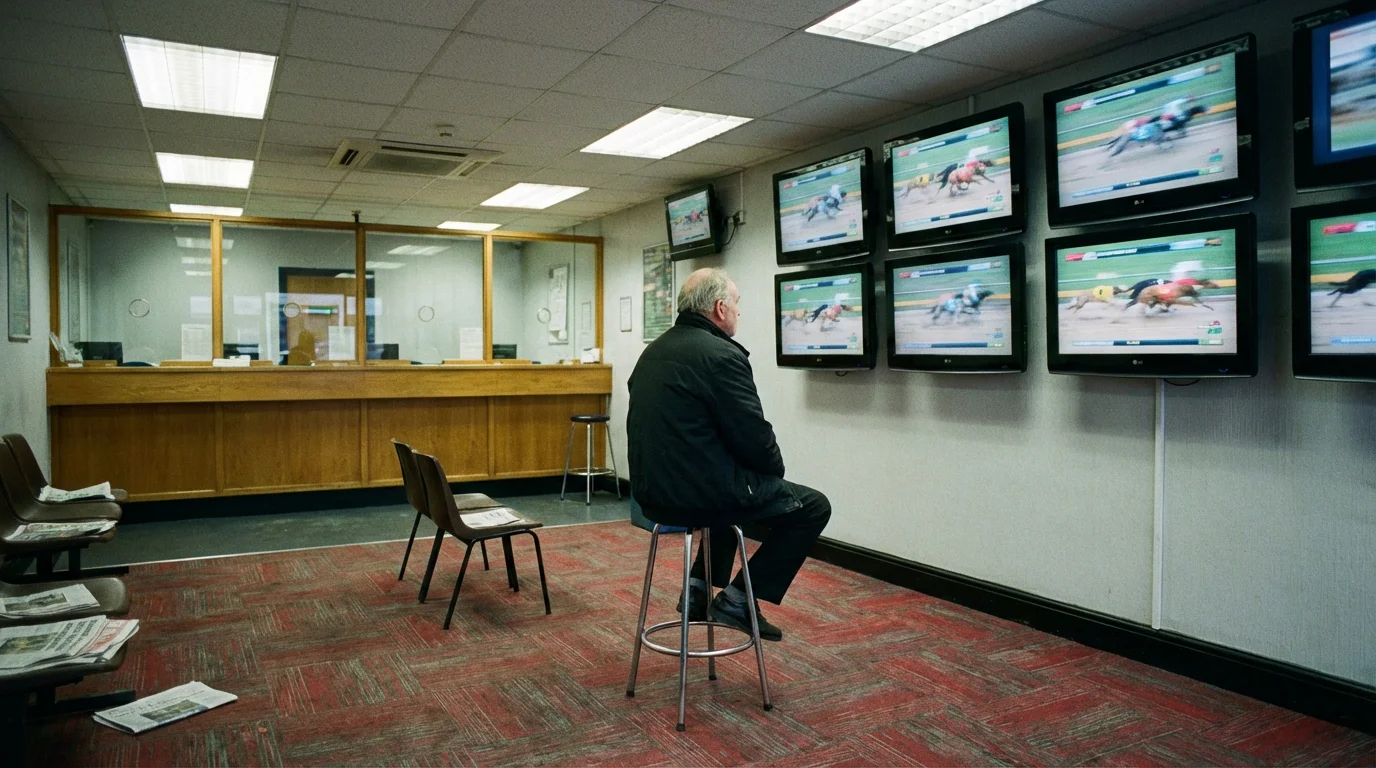
Virtual greyhound racing is available through most major UK-licensed bookmakers, both online and in retail betting shops. The high-street presence is significant — walk into any betting shop between live racing fixtures, and the screens are showing virtual races from one provider or another. The virtual product fills the schedule between live meetings and provides continuous betting turnover for the operator.
Online, virtual greyhound markets sit alongside the live racing section on bookmaker websites and apps. The interface typically looks similar to a live race card: trap numbers, dog names (randomly generated), and odds for each runner. Some platforms offer forecasts and tricasts on virtual races, settled at fixed odds rather than CSF or CT because the concept of starting prices doesn’t apply in the same way.
The virtual racing providers that supply UK bookmakers include Inspired Entertainment (which produces the most widely distributed virtual greyhound product in the UK market), Leap Gaming, and Kiron Interactive. Different bookmakers may carry different providers, and the visual quality and odds structures vary between them. The underlying principle — RNG-determined outcomes — is the same across all providers.
One practical note: virtual greyhound bets count toward betting-shop turnover figures but don’t contribute to the BAGS levy or any funding for real greyhound racing. Punters who want their betting activity to support the actual sport should be aware that virtual product turnover stays within the bookmaking and gaming ecosystem rather than flowing back to tracks, trainers, or the GBGB.
Virtual vs Real: Key Differences
The fundamental difference is agency. In real greyhound racing, the outcome is determined by physical events: the speed of the dogs, the trap draw, the going, the interference at the bends. Each of those factors can be studied, analysed, and assessed — which is why form reading exists and why skilled bettors can develop an edge. In virtual racing, the outcome is determined before the simulation begins, and no observable characteristic of the virtual dogs influences the result. Analysis has no application because there’s nothing to analyse.
Form doesn’t exist in virtual racing. The virtual dogs have no history, no running style, no trainer, and no physical condition. Each race is independent of every previous race. A virtual dog that won its last three races has no greater probability of winning its next one than a virtual dog that lost its last ten — because those prior results were each generated independently by the RNG. Streaks and patterns in virtual results are the natural product of randomness, not evidence of form or tendency.
Trap draw has no genuine significance in virtual racing. While the visual simulation may show inside dogs running closer to the rail, the finishing order is determined by the RNG independent of trap position. Any apparent trap bias in a sample of virtual races is random noise, not structural advantage. The geometry that creates real trap bias at real tracks doesn’t exist in a virtual environment because there is no real geometry — only animation.
Odds quality is structurally worse in virtual racing. The higher overround (120-130 per cent versus 112-118 per cent for live greyhounds) means more of every pound staked is retained by the operator. Over time, this higher margin guarantees a faster depletion of your bankroll than equivalent betting on live greyhound races. The house edge in virtual racing is comparable to casino games rather than sports betting.
The pace of play is faster. A virtual race every three minutes means 20 betting opportunities per hour. In live racing, a 12-race meeting spans three hours — four races per hour. The accelerated pace of virtual betting means losses (and the house edge) accumulate five times faster per hour than in live racing, assuming similar stake sizes. This speed is by design — it maximises betting volume and operator revenue.
Virtual Greyhound Betting Tips
Because virtual greyhound results are random, there is no form-based strategy that can produce a long-term edge. Any system, pattern, or method that claims to beat virtual greyhound racing is either mistaken or dishonest. The RNG ensures that past results have no predictive value for future outcomes, and the overround ensures the operator wins over volume.
What you can manage is your exposure. If you bet on virtual greyhounds for entertainment — accepting that the house has a structural edge and you’re paying for the experience — then the tactical considerations are about minimising the cost of that entertainment.
Stake small. The accelerated pace of virtual racing means small stakes accumulate quickly. A one-pound bet every three minutes translates to 20 pounds per hour. Over an evening session, that’s 60 to 80 pounds at risk. Set a session budget before you start and stop when you reach it, regardless of whether you’re ahead or behind.
Avoid exotic bets. Forecasts and tricasts on virtual races carry even higher margins than win bets because the operator prices each permutation with its own edge. The compounding of margins across multiple selections in the correct order makes virtual exotic bets among the worst-value products in the betting market.
Don’t chase patterns. If trap 1 has won the last three virtual races, it has no greater probability of winning the fourth. Chasing apparent streaks is a cognitive bias — the gambler’s fallacy applied to a product that is specifically designed to be random. Each virtual race is independent. Treat it that way.
If you find yourself spending more time and money on virtual racing than on live racing, step back and assess why. Virtual products are designed to be fast, accessible, and continuously available — three characteristics that make them effective at extracting money from bettors who aren’t exercising deliberate control. The absence of form study, the absence of analysis, and the absence of any skill component mean that virtual racing rewards no expertise. If you have expertise in greyhound form, apply it to the real thing.
Simulated Action, Real Stakes
Virtual greyhound racing is a gambling product that borrows the visual language of a sport. It’s not the sport itself. The money you stake is real, the losses are real, and the house edge is real — but the race is simulated, the dogs are digital, and the outcome is an algorithm. There’s nothing wrong with placing the occasional virtual bet as entertainment, provided you understand exactly what you’re buying: a random-number lottery with greyhound-shaped packaging. Treat it as such, budget accordingly, and save your serious analysis for the meetings where actual dogs are doing the running.