Best Greyhound Betting Sites – Bet on Greyhounds in 2026
Loading...
The Youngest Dogs on the Card
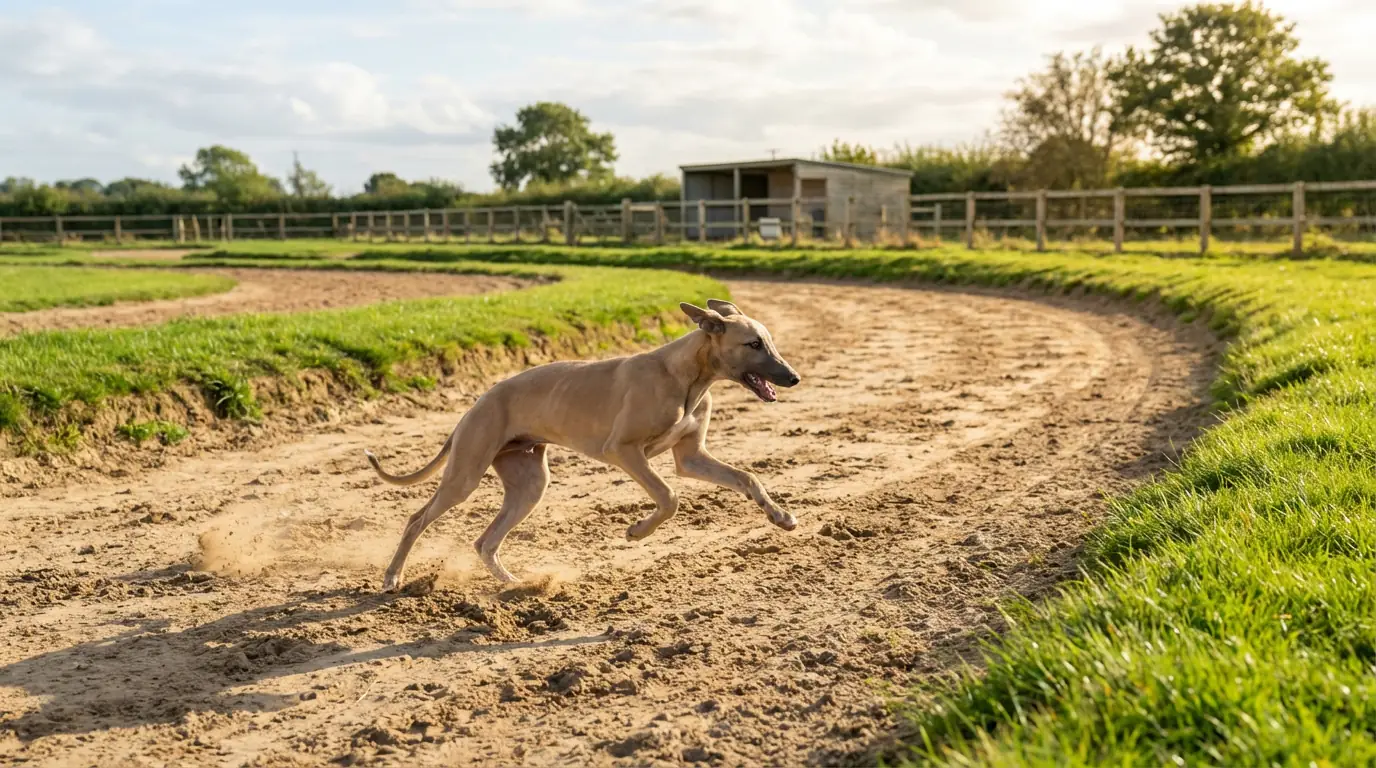
Puppy racing is where careers begin and reputations are built from scratch. Every dog that ends up graded A1 at Doncaster started somewhere — usually in a puppy race, usually with form that looked nothing like what it would produce six months later. Puppy races exist to give young greyhounds competitive experience while they’re still developing physically and mentally, and they create a category of racing where the usual rules of form reading apply less reliably than anywhere else on the card.
For bettors, puppy racing is a high-variance proposition. The dogs are changing week to week — growing into their frames, learning how to trap, figuring out how to negotiate bends at speed. A puppy that finishes last one week can win the next after a physical growth spurt or a sudden improvement in trapping technique. That volatility scares off most punters, which means the market is soft. If you understand what you’re looking at, puppy races offer value precisely because most people don’t.
This guide covers the definition and structure of puppy racing in the UK, how to read early-career form, the physical development factors that affect performance, and the betting angles that puppy races produce.
What Constitutes a Puppy Race
In UK greyhound racing, a puppy is defined as a dog under 24 months of age. The age is calculated from the dog’s date of birth as recorded in the GBGB register, and the puppy classification is temporary — once the dog passes its second birthday, it moves into the adult racing pool and is graded alongside dogs of all ages.
Puppy races are scheduled as separate events on the race card, distinct from the standard graded races. They’re typically run over standard distance — 483 metres at Doncaster — though some tracks schedule puppy sprints as well. The fields are drawn from dogs that meet the age criterion, and the grading within puppy races is less formal than in adult racing. The racing manager groups puppies based on their trial times and any early race form, aiming for competitive fields, but the lack of established form for most puppies means the grading is necessarily approximate.
Before a puppy can race competitively, it must complete a qualifying trial at the track. The trial establishes that the dog can trap, negotiate bends, and finish the distance safely. It also produces a time that the racing manager uses for initial grading. The trial time is published and available on the Doncaster stadium website, and it’s the first piece of data a bettor has on a new puppy — though it’s a limited one, because trial conditions (no competition, no crowding) don’t replicate race conditions.
The frequency of puppy races on the Doncaster card varies. Some meetings feature one or two puppy events; others have none. Weekend meetings are more likely to include puppy races than midweek BAGS cards. The total volume of puppy racing is significantly lower than adult graded racing, which means the form database for any individual puppy is thin — a puppy with five or six competitive races is relatively experienced by the standards of the category.
Puppy derbies and stakes are the prestige end of the category. These are scheduled competitions — sometimes over several rounds — that attract the best young dogs from multiple kennels. The standard of competition in a puppy derby is higher than in routine puppy races, and the results carry more informational weight because the fields are stronger. A puppy that performs well in a derby round is flagging itself as a future adult competitor of some quality.
Reading Early Career Form
Form reading for puppies requires a different calibration than for established adult dogs. The standard approach — assess the last six runs, compare times, note running comments — still applies, but the interpretation changes because the form is unstable. A puppy’s last six runs might span a period of significant physical and behavioural development, making the earliest runs in the sequence less predictive than the most recent ones.
Prioritise the most recent two or three runs above everything else. A puppy’s trajectory matters more than its average. A form line of 5-4-3-2 is more encouraging than 2-3-4-5, even though the aggregate finishing positions are identical. The first dog is improving with each outing; the second is declining. In puppy racing, the direction of the form is frequently more informative than the absolute level.
Trial times provide baseline speed data but should be discounted by approximately 0.5 to 1.0 seconds relative to competitive race times. Dogs trial without the stimulus of competition — no other dogs to chase, no crowding to navigate, no competitive adrenaline. Most puppies run faster in their first competitive race than in their trial, and the improvement can be dramatic. A trial time of 30.20 that converts to a race time of 29.50 at the first outing is a puppy responding to competition, and that response is a positive signal.
Running comments for puppies deserve more weight than for adults because they capture the learning process. A puppy with comments like SAw (slow away) in its first two runs that switches to EP (early pace) by its fourth run is a dog that’s learning to trap — a development that may not be reflected in its finishing positions if it was still getting crowded while it figured out the bends. Comments that show progressive improvement in trapping, running line, and finishing effort tell a developmental story that the form figures alone miss.
Trainer signals are amplified in puppy racing. A trainer who enters a puppy in a competitive card rather than keeping it in trials is making a statement about the dog’s readiness. A trainer who targets a specific puppy stakes or derby is signalling ambition for the dog. These placement decisions carry more weight for puppies than for adult dogs because the trainer’s assessment of the puppy’s development is genuinely informative — they see the dog daily and know whether its progress warrants competitive exposure.
Physical Development and Performance
Greyhounds between 15 and 24 months are still growing. The breed typically reaches physical maturity between 18 and 24 months, and during that window, body composition, muscle development, and skeletal structure are changing in ways that directly affect racing performance. A puppy at 16 months is a different physical athlete from the same puppy at 22 months, and the form recorded at 16 months may have no predictive value for what the dog can do at 22.
Weight changes are the most visible indicator of physical development. Puppies gain weight as they mature, and the pattern of that gain — steady and gradual versus rapid and sudden — can signal different developmental stages. A puppy that gains a kilogram over three weeks is growing normally. One that gains two kilograms in the same period may be going through a growth spurt that temporarily affects coordination and racing performance. Weight figures on the race card provide a trackable data point for monitoring development.
Muscle development affects speed in ways that aren’t always immediately visible in times. A puppy that’s developing its hindquarter muscles will see improvements in break speed and acceleration before those improvements show up in overall finishing times, because the strength gains affect the explosive start phase first. Sectional times — if available for puppy races — can capture this development earlier than overall times do.
Skeletal maturity affects bend running. Young dogs whose skeletal structure hasn’t fully hardened can struggle with the lateral forces through bends, particularly tight first bends where the field is bunched. This manifests as wide running, checking through bends, or an inability to hold a racing line. As the skeleton matures, bend running typically improves — a puppy that was clumsy through bends at 17 months may be smooth and balanced at 21 months. Patience with young dogs that show speed on the straight but awkwardness through bends is often rewarded.
The implication for bettors is that puppy form has a shorter shelf life than adult form. A run from eight weeks ago may describe a physically different dog from the one racing today. Weight each run’s relevance inversely to its age, and give the greatest weight to the most recent outing. If the most recent run was significantly better or worse than the preceding runs, treat it as the most likely indicator of current ability.
Betting Angles on Puppy Racing
The puppy racing market is inefficient because the form is volatile and most punters either avoid it or apply adult-form methods without adjustment. That inefficiency creates specific angles for bettors willing to adapt their approach.
The strongest angle is backing improving puppies before the market catches up. A puppy that has shown progressive improvement across its last three runs — faster times, better trapping, stronger running comments — is on an upward trajectory. If its most recent run was significantly better than its previous best, the market may still be pricing it based on the earlier, weaker form. The price lags behind the reality, and the gap is your edge.
Trainer form in puppy races is more predictive than in adult racing because the trainer’s development programme is a bigger factor. Trainers who consistently produce fast-developing puppies — whose young dogs improve rapidly from trial to race and from first race to fifth — have superior development systems. Tracking which trainers excel at puppy preparation gives you a kennel-level edge that supplements the individual dog’s form.
Avoid puppies with erratic form lines unless you can identify a specific explanation. A form line of 1-6-2-5-3-6 for an adult dog suggests inconsistency or interference issues. For a puppy, it might simply mean the dog is still developing and its performance fluctuates with its physical state. But betting on fluctuation is guessing, not analysis. Stick to puppies with a clear direction — up or down — and let the erratic ones prove themselves before committing money.
Place and each-way betting suits puppy racing better than win-only betting because the outcomes are inherently less predictable. A puppy you’ve identified as improving may not win its next race, but the probability of it finishing in the first two is higher than the probability of it winning outright, and each-way terms capture that broader competitive range.
Potential Isn’t Performance
Every puppy has potential. The good-looking youngster from a top kennel with a fast trial time and a promising first run has potential. So does the scrawny late developer that missed the break three times before finally putting a race together. Potential is abundant in puppy racing — it’s performance that’s scarce, and performance is what bets are settled on.
The discipline in puppy betting is to separate what a dog has done from what it might do. Back the evidence of improvement, not the promise of it. A puppy whose form is getting better with each outing is worth following because the trend is real and measurable. A puppy that’s been talked up by its connections but hasn’t produced a result that justifies the price is a story, not a bet. Stories don’t pay dividends. Form does — even when it’s only three runs deep and written in pencil.