Best Greyhound Betting Sites – Bet on Greyhounds in 2026
Loading...
The Races That Test Everything
Stayers racing at Doncaster strips away the shortcuts. At 275 metres, a fast break can paper over limited ability. At 483 metres, a favourable trap and a clear run can flatter a moderate dog. At 661 and 705 metres, neither trick works. The extended distance exposes every weakness — stamina, racing intelligence, the willingness to sustain effort through six or seven bends when the lungs are burning and the legs are heavy. What’s left after the distance has done its filtering is the truest test of a greyhound’s ability.
Stayers races appear less frequently on the Doncaster card than standard-distance events, and they attract a smaller, more specialised pool of runners. That reduced frequency creates both challenge and opportunity for bettors. The form sample is thinner, which makes assessment harder, but the betting market is also less efficient because fewer punters study stayers form with any depth. Those who do have a structural edge.
This guide covers the dynamics specific to Doncaster’s two stayers distances (UK Dog Racing) — how races unfold over six and seven bends, how to assess stamina from the form guide, the role of wide runners at longer trips, and the betting angles that stayers racing produces.
Stayers Race Dynamics
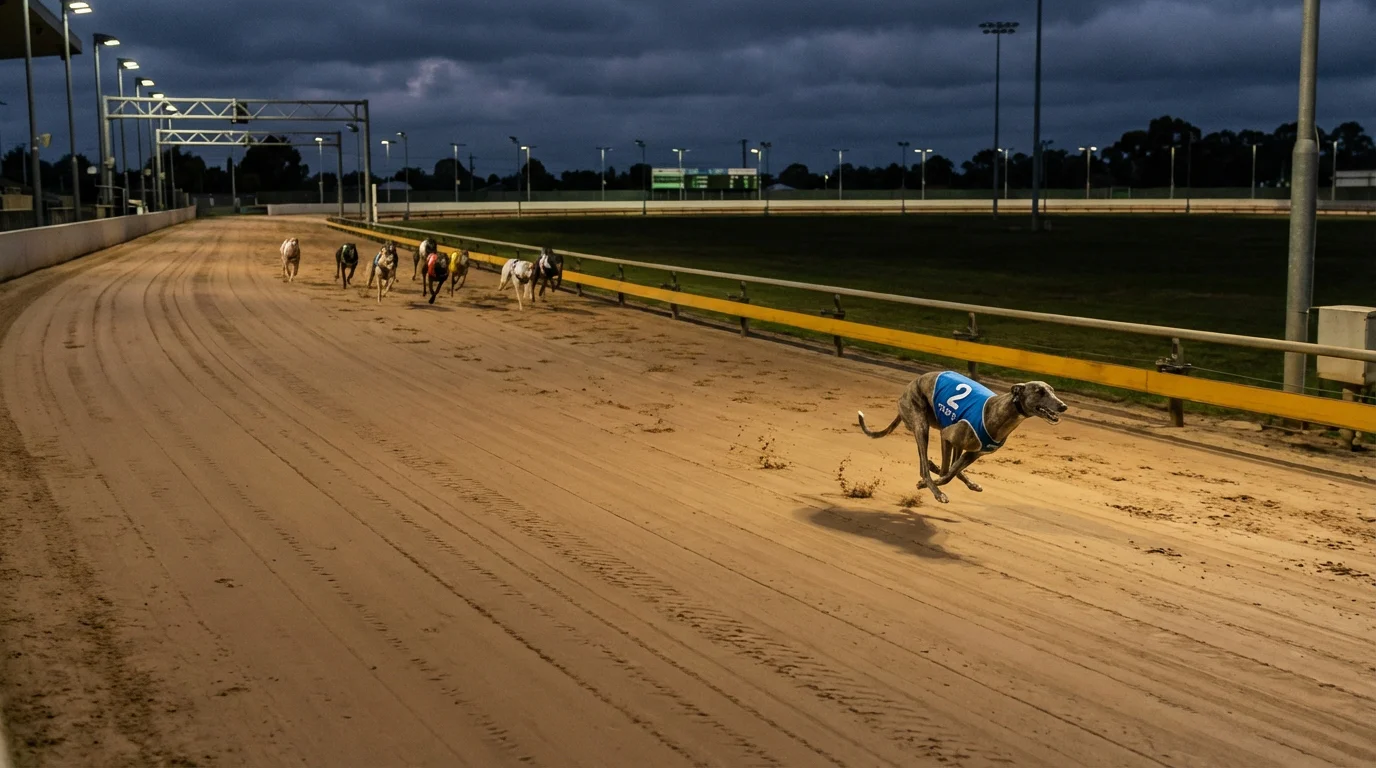
The 661m trip at Doncaster negotiates six bends. The 705m trip adds roughly another half-bend’s worth of running, bringing the total bend count close to seven. Both distances start from the same traps as the standard-distance races — the field uses the 105-metre run to the first bend before entering the circuit — but the extended distance means the field completes more laps of the track, and the additional bends fundamentally change the race dynamics.
The most immediate difference is positional fluidity. At 483 metres, a dog’s position at the second bend is a strong predictor of its finishing position. At 661 and 705 metres, that correlation weakens significantly. Dogs change positions through the middle bends in stayers races with a frequency that standard-distance form doesn’t prepare you for. A dog lying fifth at bend three can be second at bend five without requiring anything dramatic — just sustained pace and a couple of gaps on the inside or outside line.
This fluidity makes stayers races less predictable from a pace-map perspective but more rewarding for form readers who understand stamina profiles. The dog that leads through the first three bends at a stayers distance often isn’t the dog that wins. It’s the dog that’s been setting the pace for 400 metres and is now being asked to sustain it for another 260. Unless that leader has proven stamina credentials over the distance, it’s vulnerable to dogs that have been sitting behind it, conserving energy, and waiting for the final two bends to close.
Interference patterns also differ at stayers distances. There are more bends for trouble to occur, but the field tends to be more spread out by the middle of the race because the pace differences have had more time to separate the runners. The first two bends remain the danger zone — as at any distance — but from bend three onwards, stayers races are generally cleaner than standard-distance events. Dogs have found their running lines, the field has strung out, and the positional changes that do occur are more often the result of genuine ability differences than traffic incidents.
Going conditions matter more at stayers distances than at any other trip. Heavy sand saps energy cumulatively — a dog that handles heavy going over 483 metres might struggle when that same surface has to be negotiated for an extra 180 or 220 metres. Time adjustments between fast and slow going are amplified at longer distances, so comparing raw times across meetings without accounting for the variant is even more misleading than at standard distance.
Stamina Assessment from Form
The form guide tells you how a dog ran. For stayers races, the critical question is whether it can sustain that effort over a distance it may not have covered recently — or at all. Assessing stamina requires looking beyond the headline figures and into the detail of the dog’s race profile.
The first indicator is distance form. Has the dog previously raced at 661m or 705m, and what did it do? A dog with three runs at 661m showing finishing positions of 2-3-1 with running comments that include RnOn (ran on) and FinWl (finished well) has proven stayers credentials. A dog stepping up from 483m with no stayers form is an unknown quantity regardless of how impressive its standard-distance record is.
The second indicator is the pattern of its standard-distance finishes. A dog that consistently finishes strongly at 483m — gaining ground through the final two bends, posting RnOn comments — is flagging itself as a potential stayer. Its pace profile shows back-loaded speed, which is the hallmark of a stamina dog. Conversely, a dog that leads at 483m but fades in the final straight is a front-runner being stretched at standard distance and is likely to struggle even more when the trip extends.
Sectional times provide a third layer. At stayers distances, a moderate sectional is not a disadvantage in the way it is at 275m. Stayers don’t need to be quick out of the traps; they need to be quick over the final 200 metres when the rest of the field is tiring. A dog with a 5.0-second sectional at 483m that finishes with a strong overall time is converting slow early pace into strong finishing speed — exactly the profile you want at 661m and above.
Trainer patterns also inform stamina assessment. Some kennels at Doncaster specialise in stayers — their dogs are bred, conditioned, and trained for the longer distances. If a trainer with a strong stayers record sends a dog to its first 661m start, that’s a meaningful signal. The trainer presumably believes the dog has the stamina; they don’t waste entries on distance experiments with dogs that can’t stay.
Weight is a marginal factor but worth noting. Heavier dogs burn more energy over distance, which means the weight figure on the race card has slightly more predictive relevance at stayers distances than at shorter trips. A dog carrying 35kg over 705m is at a modest disadvantage to one carrying 30kg, all else being equal. It’s not a primary factor, but in a race where two dogs are closely matched on form, weight can be the tiebreaker.
Wide Runners and Stayers Distances
Wide-running dogs — those designated with a (W) on the race card — find their most natural home at stayers distances. The extended number of bends gives wide runners multiple opportunities to make ground on the outside, and the reduced importance of trap draw at these distances means the wide draw that would penalise them at 275m is a neutral factor at 661m and above.
The mechanics are straightforward. A wide runner races two to three metres further from the rail than a railer through each bend. Over two bends at 275m, that extra distance is significant relative to the total race length. Over six or seven bends at stayers distances, the extra distance is still there in absolute terms, but it’s offset by two advantages: the wide runner avoids rail crowding through the middle bends (where the field is bunched on the inside), and its natural line gives it a clearer run through traffic that the railers have to navigate.
Some of the most successful stayers at Doncaster are confirmed wide runners. Their record over 661m and 705m is consistently better than over 483m because the longer trip allows their running style to express itself fully. When assessing a stayers race, note which dogs are wide runners and consider that their form at standard distance may understate their ability at the longer trip.
The trap draw for wide runners at stayers distances is relatively unimportant, but there’s a marginal preference for middle or outside traps (3, 4, 5, or 6) because these positions allow the wide runner to adopt its natural line immediately without needing to cross from the inside. A wide runner drawn in trap 1 faces a choice: run unnaturally close to the rail or expend energy early to move out to its preferred racing line. Neither option is ideal.
Betting on Stayers at Doncaster
The stayers betting market at Doncaster is thinner than the standard-distance market, which creates specific conditions for finding value. Fewer punters analyse stayers form in depth, bookmaker pricing is less refined, and the reduced race frequency means the form data that does exist is less widely disseminated.
The most reliable angle is backing dogs with proven form at the distance against dogs stepping up for the first time. The attrition rate for step-up runners at 661m and 705m is high — many dogs that look capable based on their 483m form simply don’t stay. Until a dog proves it handles the distance, its stayers credentials are theoretical, and theoretical credentials deserve a longer price than proven ones.
Forecast and tricast betting at stayers distances is riskier than at standard distance because the positional fluidity through the middle of the race makes the exact finishing order harder to predict. Stayers races are better suited to win and each-way betting, where you’re backing a dog to be in the first two rather than predicting the precise sequence. If you do bet forecasts at stayers distances, reverse forecasts covering two proven stayers offer the best risk-return balance.
Going conditions should carry extra weight in your stayers assessment. If the track is heavy and two dogs in the race have form exclusively on fast going, discount them. Stamina demands on heavy going over 661m are qualitatively different from anything a 483m race will test, and dogs without relevant heavy-going form at stayers distances are unpredictable runners.
The Long Way Round
Stayers racing at Doncaster is the sport at its most honest. There’s nowhere to hide over 661 or 705 metres — no trap advantage to exploit, no short cut through the bends, no two-length break from the boxes that carries you home unchallenged. The distance asks a simple question: can this dog sustain its effort when the race keeps going? The ones that can are worth following, and the ones that can’t are exposed eventually, no matter how good they look over shorter trips.
For bettors, stayers racing is a niche within a niche — a corner of the Doncaster card where specialist knowledge pays a premium because so few people bother to develop it. The form is thinner, the market is softer, and the dogs that handle the distance tend to be consistent because the distance itself filters out the pretenders. If you’re willing to put in the work that most punters skip, the long way round is often the shortest path to value.