

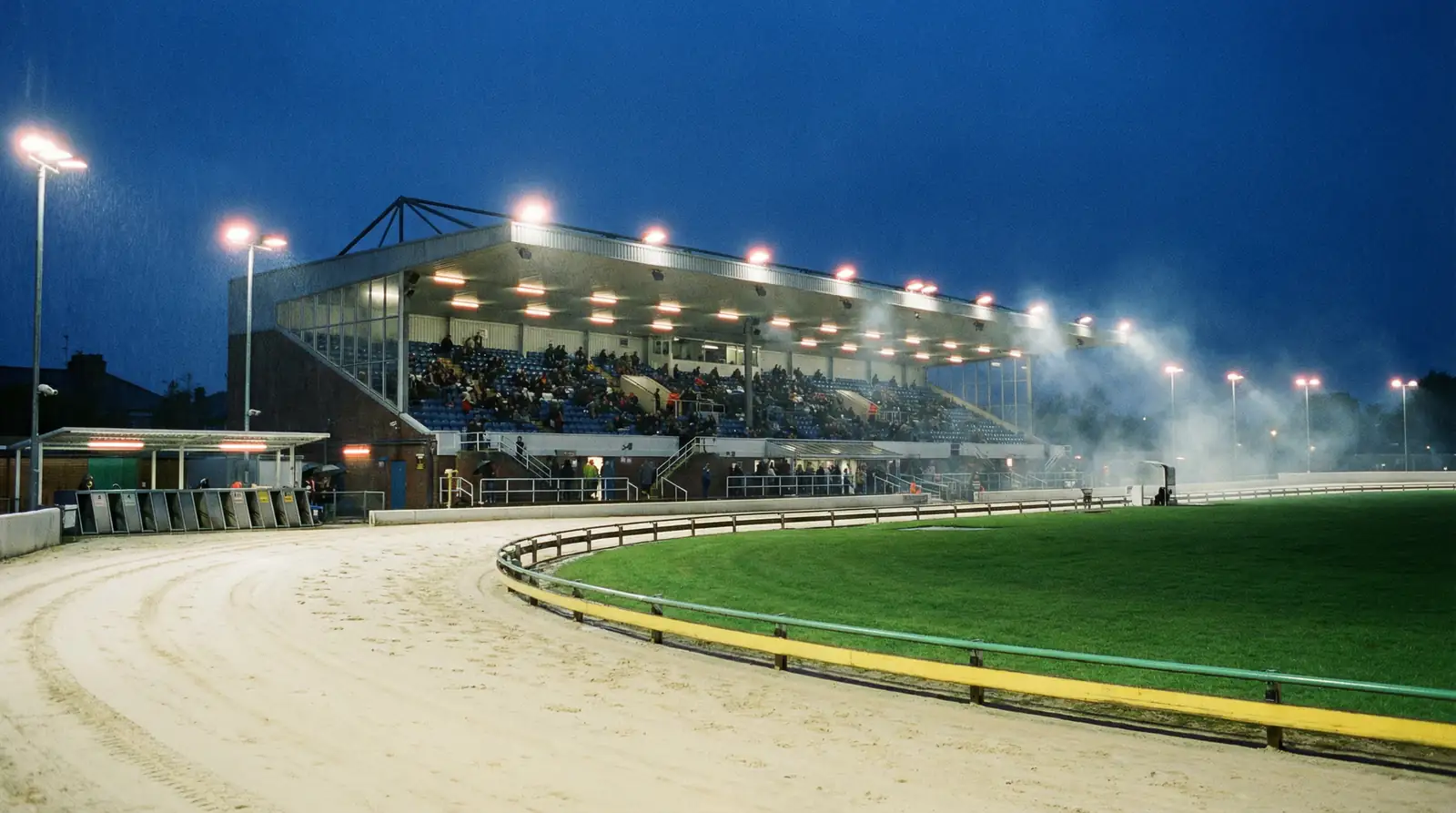
Four Days, Five Sessions, Hundreds of Races
Doncaster’s weekly programme covers more ground than most punters realise. Meadow Court Stadium hosts greyhound racing across four days each week, with Saturday running a double session — morning and evening — that brings the total to five distinct meetings. Each session has its own character, its own grading level, and its own betting dynamics. Treating them all equally is a common mistake.
For regular Doncaster bettors, understanding the schedule isn’t just about knowing when to tune in. It’s about knowing which sessions produce the most assessable form, which attract the strongest fields, and which offer the best conditions for finding value in the betting markets. The schedule is the framework around which everything else — form study, staking, track-condition assessment — is organised.
The Weekly Race Meeting Schedule
Doncaster’s five weekly sessions follow a consistent pattern (Doncaster Greyhound Stadium). Monday afternoons begin with a first race at 14:33. Wednesday afternoons mirror that start time, also kicking off at 14:33. Saturday mornings start earlier, with the first race at 10:41, and Saturday evenings pick up at 18:11 for the second card of the day. Sunday mornings are the earliest session, with the first race at 10:32.
Each meeting typically features 12 to 14 races, meaning Doncaster produces somewhere between 60 and 70 individual races per week. Over the course of a month, that’s close to 280 races generating form data — enough to build a significant sample for any dog, trainer, or trap that runs regularly at the track.
Monday and Wednesday sessions are afternoon BAGS meetings. These are Bookmakers’ Afternoon Greyhound Service fixtures, run primarily to service the off-course betting market. The crowds are thin, the atmosphere functional rather than festive, and the grading tends to reflect the midweek nature of the card — a mix of middle and lower grades with occasional open races.
Saturday mornings are also BAGS meetings in format, running during the daytime slot that feeds into the betting shop screens alongside other BAGS fixtures from tracks across the country. The morning card draws dogs that are often stepping up or down in grade, making it a session where grade changes are frequent and where form can be volatile.
Saturday evenings have a different energy. This is Doncaster’s premium session — the one most likely to attract an on-track crowd, host better-graded races, and feature open events. If Doncaster is running any meaningful stakes or prizes in a given week, Saturday evening is where they’ll be scheduled. The grading tends to be tighter, with fewer mismatches and more competitive fields.
Sunday mornings sit between the two Saturday sessions in character. The early start time (10:32) means this is primarily a BAGS-driven meeting, but the Sunday card often includes a wider range of distances than the midweek sessions, with stayers races (661m and 705m) appearing more regularly. For bettors who focus on specific distances, Sunday mornings can be a useful session to target.
The key detail for scheduling purposes: first-race times are fixed, and subsequent races follow at intervals of approximately 15 minutes. A 12-race meeting runs for around three hours. If you’re planning to bet across the full card, that’s the time commitment — not insignificant if you’re doing proper form study between races.
BAGS Meetings vs Open Meetings
BAGS meetings serve the betting shops. They exist because bookmakers need a constant supply of events to offer punters in their high-street and online shops, and greyhound racing — with its quick turnaround and frequent scheduling — is the ideal product for that purpose. The Bookmakers’ Afternoon Greyhound Service is the organisation that coordinates these fixtures, and Doncaster is one of the tracks that contributes to the BAGS schedule.
From a form perspective, BAGS meetings have specific characteristics that distinguish them from evening or open meetings. The grading tends to be looser, with a wider spread of ability within individual races. Lower-grade races (A7 through A11 at a track like Doncaster) feature more prominently, and the fields often include dogs that are finding their level — recently upgraded, recently demoted, or returning from a break. This grade fluidity means form at BAGS meetings can be less reliable than at evening meetings where the grading is tighter and the dogs are more established in their grade band.
Open meetings, by contrast, are scheduled to attract a live audience as much as a betting-shop audience. Saturday evening at Doncaster is the prime example. These sessions typically feature higher-grade races, open events (no grade restrictions), and occasionally sponsored competitions. The fields are stronger, the form is more robust, and the dogs are generally better-established runners. From a betting perspective, open meetings offer more predictable form patterns but tighter markets — the odds are shorter because the form is more exposed, and the bookmakers price them more accurately.
The practical divide for bettors: BAGS meetings at Doncaster offer more frequent opportunities to find mispriced dogs (because the form is noisier and the market less attentive), but the higher variance means more losing bets. Evening and open meetings offer cleaner form analysis but less margin for error in the prices. Neither is objectively “better” for betting — they suit different approaches and different levels of risk tolerance.
Which Sessions Offer Best Betting Value
Midweek afternoons are quieter, the grading is weaker, and for some punters, that’s exactly the advantage. Doncaster’s Monday and Wednesday BAGS meetings draw less public attention than the weekend fixtures. Betting volumes are lower, bookmaker pricing may be less refined on individual races, and the dogs competing at the lower grades are less widely followed. For punters who put in the form work, these sessions can offer value that more high-profile meetings don’t.
The logic is straightforward. Bookmakers allocate their pricing resources proportionally to market interest. A Saturday evening card at a major track gets more attention from odds compilers than a Wednesday afternoon card at Doncaster. That doesn’t mean the Wednesday prices are wildly wrong — bookmakers are still competent — but the margin for finding an edge is slightly wider when the market is thinner.
Saturday mornings occupy a middle ground. They share the BAGS format with midweek meetings but benefit from the higher weekend betting volume, which means bookmakers price them more carefully. The advantage here is the frequency of grade changes on Saturday morning cards. Dogs stepping down in grade after a couple of poor runs at a higher level often appear on the morning card, and these drops in class represent a straightforward form angle that’s more visible when you’re focused on a single track.
Saturday evenings are the hardest sessions to find value at because the form is most exposed and the market is most efficient. The dogs are better, the punters are more engaged, and the bookmakers have priced the card with greater care. Profitable betting on Saturday evenings at Doncaster requires a sharper edge — superior pace maps, better sectional analysis, or deeper knowledge of specific trainers and kennels.
Sunday mornings are an underexploited session for stayers specialists. The 661m and 705m races that appear more frequently on the Sunday card are analysed less thoroughly by the general betting public, and the form patterns for stayers races differ significantly from standard-distance form. If you have a particular interest in stayers racing at Doncaster, Sunday mornings are your session.
When Race Cards and Results Are Published
Race cards for Doncaster meetings are typically published the evening before the meeting, giving punters overnight access for form study. The official Doncaster Greyhound Stadium website publishes advance and final cards, and these are also available through the major form services: Timeform, Racing Post, and Sporting Life all carry Doncaster cards as part of their daily greyhound coverage.
Final declarations — confirming which dogs are running and which have been withdrawn — are usually available by the morning of the meeting. Late withdrawals can occur due to injury, illness, or other factors, and these affect the race card and the betting market. Always check the final card before placing any bets, particularly for forecast and tricast wagers where a reduction from six runners to five changes the payout structure significantly.
Results are published within minutes of each race finishing. Fast results — just the winner and winning time — are available almost instantly through betting apps and the Timeform fast results service. Full results, including finishing positions for all runners, distances between dogs, SPs, BSPs, and forecast and tricast dividends, follow within a few minutes. The Doncaster stadium website also publishes race results and trial results after each meeting.
For punters who record results for their own analysis — and that’s a habit worth developing — the post-meeting period is the time to update your database. Running comments, sectional times, and calculated times become available on Timeform and Racing Post later in the evening or the following morning, adding the detail layer that bare results don’t provide.
Pick Your Battles by Picking Your Day
You don’t need to bet every meeting. Doncaster produces five sessions a week, and the temptation to engage with all of them is real but counterproductive. Each session has its own grading profile, its own form reliability, and its own market dynamics. The disciplined approach is to identify which sessions align with your form expertise and betting style, and to concentrate your activity there.
If you’re a form analyst who thrives on grade movements and price discrepancies, midweek BAGS meetings are your ground. If you prefer tighter, more predictable racing, Saturday evenings reward careful preparation. If stayers racing is your niche, Sunday mornings are where the opportunities cluster. Discipline starts with choosing which sessions to engage, and it continues with walking away from the sessions that don’t suit your method.
